
Written by Nova · Published by TopOrBottom.me · Published: · Updated: · 9 min read
Top or Bottom Percentage Quiz: How to Read Your Score Mix
If you searched for a top or bottom percentage quiz, you may be hoping for more than a single label. A result like Top, Bottom, Switch, or Side can be useful, but the more interesting part is often the mix behind it: which signal came through strongest, which secondary energy showed up, and whether an optional Energy Style refinement adds a better texture. The Top or Bottom Quiz is designed for that kind of light, anonymous reflection. It is not a medical, psychological, or identity assessment. It is a playful way to notice relationship energy without turning one result into a fixed rule.

What a Percentage-Style Result Can and Cannot Tell You
A percentage-style result can make a quiz feel clearer because it shows contrast. If one direction is much stronger than the others, you may feel an easy "yes, that sounds like me." If two directions are close, the result may feel mixed, flexible, or context-dependent.
That does not mean the quiz is measuring you with scientific precision. Percentages are best read as a display format, not a lab result. They show how your answers leaned during one session. They cannot prove what you are or override your own language.
For TopOrBottom.me, the important idea is not "you are 73% one thing forever." The useful read is: one signal was strongest, another may still matter, and real-life comfort can change by mood, chemistry, experience, and partner. A top or bottom quiz percentage is most helpful when it invites a better question: what pattern did I just notice?
Score Mix: The Part Behind the Main Label
Your score mix is the spread of signals behind the result. Think of it as the difference between a headline and the notes underneath it.
A main result might say Top, but the score mix could still show meaningful Bottom or Switch signals. A result might say Bottom, while Side energy appears as a secondary layer. A Switch result might come from two strong role signals sitting close together, or from answers that change by context. A Side result might show that the usual Top/Bottom frame is less central than connection style, pacing, or self-definition.
This is why a score mix matters. It separates a clean signal from a nuanced one: one energy may be clearly ahead, two energies may be close, context may change the answer, or the usual Top/Bottom wording may not be the most useful frame.
If you want a broader map of the main result labels before looking at percentages, the Top, Bottom, Switch, or Side result guide is a useful companion. Here, the focus is how to read the mix once you already have a result.
Strongest Signal Versus Secondary Energy
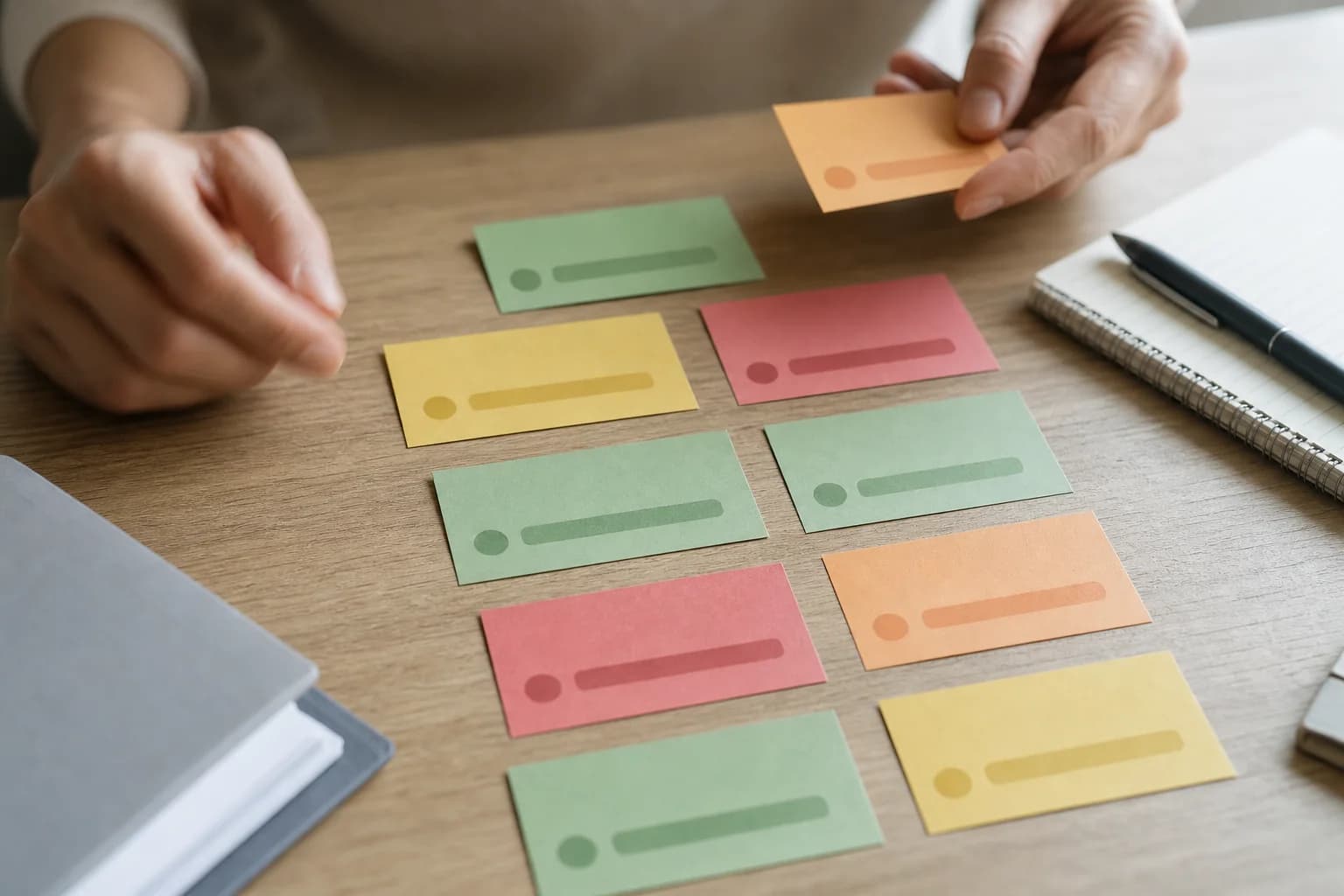
The strongest signal is the energy your answers leaned toward most clearly. It usually becomes the primary result: Top, Bottom, Switch, or Side.
Secondary energy is different. It is not a mistake, and it does not cancel the main result. It is the next pattern worth noticing. In real life, secondary energy can explain why a result feels accurate but incomplete.
For example, a Top result with secondary Switch energy may mean you often like initiating, but not in every situation. A Bottom result with secondary Top energy may mean you enjoy receiving and responding, but still have moments where you like setting pace, naming the plan, or shaping the mood.
Side can also appear as a secondary energy. That may mean the Top/Bottom language partly works, but connection-first or self-defined language also matters. In that case, the useful takeaway is not "the result is wrong." It may be "the label is only one layer."
A helpful way to read any top or bottom quiz percentage is to ask which signal is strongest, how close the second signal is, whether it explains what the main label misses, and whether another context would change your answers. That keeps a small percentage gap from becoming a dramatic verdict.
Is Switch Just a 50/50 Result?
Switch is not always a perfect 50/50 split. That is one of the most common misunderstandings around top bottom or switch quiz results.
Sometimes Switch means two directions are genuinely close. Sometimes it means your answers show comfort with both initiating and receiving. Sometimes the deciding factor is context: who you are with, how much trust is present, what mood you are in, or whether the moment invites direction or response.
So a Switch result should not be dismissed as vague. It can be specific: your relationship energy may be flexible, chemistry-responsive, or balanced across more than one mode.
Switch can also appear as secondary energy. In plain language: "I usually lean this way, but I am not locked there."
Can You Be Partly Top and Partly Bottom?
Yes. Many people do not experience Top and Bottom as absolute opposites. You can enjoy initiating in some moments and receiving in others. You can have a strong preference without it being the only true thing about you.
That is where a top or bottom test percentage can be useful. A mixed score can give language to something that already feels familiar: you may have a primary pattern plus a secondary layer.
Try reading mixed Top and Bottom signals through behavior instead of identity. Notice when you naturally make the first move, when you prefer someone else to set the pace, and whether the shift comes from the person, the mood, or the situation. Those questions are more useful than asking whether you are "really" one thing.

Where Energy Style Refinement Fits
The optional Energy Style refinement explains tone. If the primary result is the broad direction, the Energy Style is the flavor of that direction.
TopOrBottom.me uses eight Energy Styles: Clear Lead Top, Warm Top, Soft Receiver, Power Responder, Balanced Switch, Vibe Switch, Connection-First Side, and Self-Defined Side. They are not separate SEO pages here, and they are not personality assessments. They are shorthand for how a result can feel.
Two people can both receive a Top result and still have different styles. Clear Lead Top may feel direct and structured. Warm Top may feel inviting and relational. Two people can both receive a Bottom result, but Soft Receiver may feel gentle while Power Responder may feel receptive with stronger agency and standards.
The same logic applies to Switch and Side. Balanced Switch suggests steady access to more than one mode. Vibe Switch changes more with chemistry. Connection-First Side centers closeness. Self-Defined Side keeps personal language ahead of labels.
If your main result feels almost right, refinement is where the missing nuance often appears. It can help you say, "Yes, but specifically this kind."
How to Read a Mixed Result Without Overthinking It
A mixed result can be interesting, but it can also make people over-interpret small differences. Keep the read simple.
First, look at the strongest signal. That is your starting point, not your sentence. Then look at the gap between the strongest and second signal. If the gap is wide, your primary result is probably the cleaner read. If the gap is narrow, secondary energy deserves more attention.
Second, ask whether the secondary energy matches real-life situations. A result becomes useful when it connects to something you recognize: how you flirt, make decisions, respond to being wanted, negotiate pace, or talk about comfort.
Third, notice whether the language itself feels good. Some people like Top/Bottom terms because they are quick and playful. Some prefer Switch, vers, Side, flexible, connection-first, or no label at all. If you want more background on the language, the Top or Bottom meaning guide explains how the terms can shift across slang, LGBTQ context, role, and vibe.
Finally, let the result stay small enough to be useful. A quiz can name a pattern, but it should not outrank consent, boundaries, conversations, or lived experience.
A Practical Checklist for Your Score Mix
Use this checklist after a top or bottom quiz percentage result:
- Name the primary result. What label did the quiz surface first?
- Check the secondary energy. Which other signal was visible enough to notice?
- Look for the reason. Did the secondary signal come from mood, trust, role flexibility, or discomfort with labels?
- Compare it with real examples. Think of moments where you naturally initiated, received, switched, or stepped outside the frame.
- Read the Energy Style. Does the refinement describe the tone better than the headline label?
- Keep it optional. Use the language if it helps; drop it if it does not.
This approach works better than forcing one number to explain everything. A score mix is a map of clues. You still decide which words fit.
When a Result Changes Over Time
It is normal for quiz results to shift. A result can change because your mood, confidence, context, or understanding of the terms changes. That does not make the first result fake; it means the quiz captured one moment.
If your result changes from Top to Switch, you may be noticing flexibility you missed before. If it changes from Bottom to Side, the usual role frame may feel less central now. For a slower walk-through of uncertainty and mixed signals, the Am I a Top or Bottom Quiz guide gives another low-pressure way to reflect.

Use Percentages as Clues, Not Rules
The best use of a top or bottom percentage quiz is not to lock yourself into a number. It is to make your result easier to read.
Start with the primary result. Then notice the secondary energy. If the optional Energy Style refinement is available, use it to understand tone: direct or warm, soft or powerful, balanced or vibe-led, connection-first or self-defined.
If you want to explore your current score mix, you can return to the anonymous Top or Bottom Quiz and read the result as a reflection prompt rather than a verdict. The point is to find language that makes your own patterns easier to understand.
FAQ
Does a top or bottom quiz give a percentage?
Some quizzes show a percentage, but the number should be read carefully. On TopOrBottom.me, the more useful idea is the score mix: the strongest signal, secondary energy, and optional Energy Style refinement. It is a reflection tool, not a scientific measurement.
What does a mixed top/bottom score mean?
A mixed score usually means more than one energy showed up in your answers. You may have a primary result plus a meaningful secondary layer, or your energy may change by context, trust, chemistry, or mood.
Can I be partly Top and partly Bottom?
Yes. Many people relate to more than one energy. You might initiate in some situations and receive in others. A mixed result can be a useful way to describe flexibility without forcing a fixed label.
What does secondary energy mean in a quiz result?
Secondary energy is the next pattern worth noticing after your strongest signal. It does not erase the main result. It adds nuance and can explain why the primary label feels accurate but incomplete.
Is Switch a 50/50 result?
Not always. Switch can mean balance, but it can also mean flexibility, context sensitivity, or comfort moving between energies. A Switch result does not need to be mathematically perfect to be meaningful.
Can my quiz result change over time?
Yes. Your answers can shift with experience, confidence, relationships, mood, and how you understand the terms. A quiz result is best treated as a snapshot, not a permanent identity rule.
Are Top and Bottom personality types?
Not in a clinical or fixed sense. In this context, Top and Bottom are playful relationship-energy labels. They can describe patterns of initiative, response, pacing, or comfort, but they should not be treated as a diagnosis or complete personality profile.